

Soothing Relief for Cat and Dog Allergies in Rancho Murieta, CA
A little scratching now and then is part of life for many pets. Constant licking, chewing, head shaking, red skin, or recurring ear infections are different. These signs can point to allergies or another skin condition that needs veterinary attention before discomfort, inflammation, or infection gets worse.
Murieta Pet Hospital provides care for cat and dog allergies in Rancho Murieta, CA, along with diagnosis and treatment for many common skin problems. Whether your pet has itchy skin, hair loss, chronic ear infections, paw chewing, or repeated flare-ups, our team works to understand what is causing the irritation so we can build a care plan that supports lasting comfort.
Give us a call at (916) 885-0288 or book an appointment online for an allergy or skin consultation.
Common Skin Problems We See in Dogs and Cats
Skin conditions can show up in several ways. Some pets scratch constantly, while others develop irritated ears, thinning fur, skin odor, or changes in the texture of their skin.
Common symptoms of allergies and skin disease include:
-
Persistent scratching or licking
-
Chronic ear infections
-
Red, inflamed, or thickened skin
-
Hair loss or thinning coat
-
Scabs, sores, or hot spots
-
Paw chewing
-
Excessive shedding
-
Skin odor
-
Flaky or greasy skin
-
Scooting or anal gland irritation
Some pets have seasonal symptoms that appear during certain times of the year. Others struggle with itching, ear problems, or skin infections year-round.
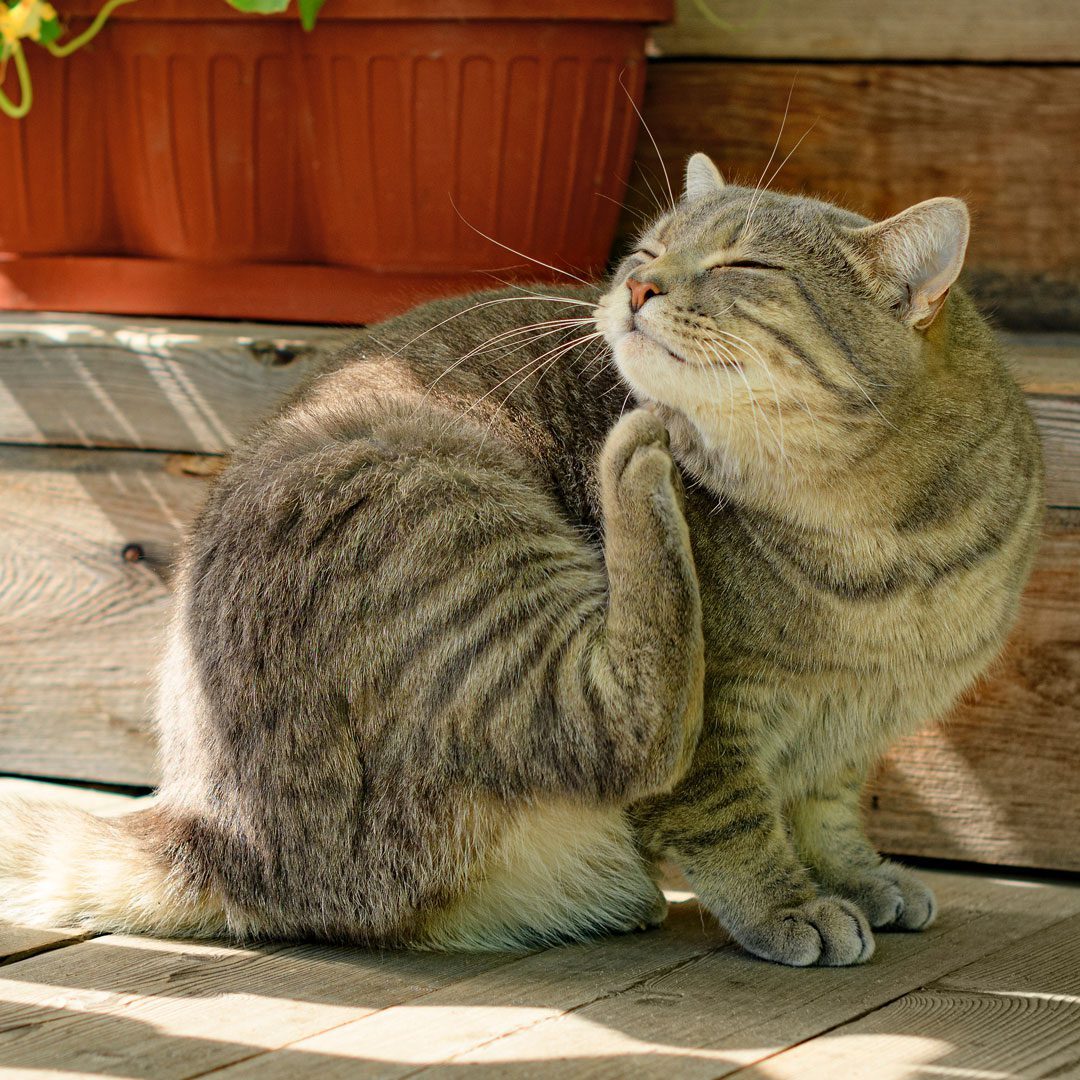
What Causes Skin Problems in Pets?
Skin disease is often more complicated than it looks at first. Allergies are a common cause, but infections, parasites, hormonal conditions, and environmental irritants can also lead to itching, redness, odor, and inflammation.
For many pets, allergies are related to environmental triggers such as pollen, grass, dust, or mold. Food sensitivities, flea bites, skin mites, bacterial infections, yeast infections, and contact irritation from shampoos, cleaners, plants, bedding, or outdoor surfaces can also contribute. Some pets develop skin and ear problems because of underlying health conditions, including thyroid disease or Cushing’s disease.
Because many skin conditions look similar, finding the cause usually starts with your pet’s history, a physical exam, and diagnostic testing when needed.
How We Diagnose and Treat Allergies and Skin Conditions
Our goal is to identify what is contributing to your pet’s symptoms and create a treatment plan that helps relieve discomfort, address infection, and reduce future flare-ups.
Depending on your pet’s condition, diagnostic testing may include:
-
Skin or ear cytology to check for bacteria or yeast
-
Flea and parasite evaluation
-
Bloodwork to screen for underlying health concerns
-
Food elimination trials
-
Skin scrapings
-
Allergy testing
Treatment recommendations vary based on your pet’s diagnosis, symptoms, and response to care. Your pet’s plan may include:
-
Prescription allergy medication
-
Medicated shampoos, sprays, mousses, or wipes
-
Ear medication
-
Antibiotics or antifungal medication
-
Flea prevention
-
Dietary changes or prescription diets
-
Nutritional supplements
-
Recheck visits to monitor progress
-
Referral coordination with a board-certified veterinary dermatologist when needed