
Step-by-Step Guide: How to Safely Remove a Tick From Your Dog
Finding a tick on your dog is unsettling, but knowing how to respond makes all the difference. Removing a tick from a dog quickly and correctly is one of the most important things you can do to protect your pet from tick-borne diseases like Lyme disease, Rocky Mountain spotted fever, and ehrlichiosis. Our team at Murieta Pet Hospital in Rancho Murieta, CA put together this guide to walk you through exactly what to do and what to avoid.
Why Prompt Tick Removal Matters
The longer a tick stays attached to your dog, the greater the risk of disease transmission. Most tick-borne pathogens require the tick to be attached for 24 to 48 hours before transmission occurs, which means that removing a tick from your dog within the first day of attachment significantly reduces the risk of infection.
Ticks are most active in spring and summer but can be found year-round in many parts of California, including the Rancho Murieta area. Dogs that spend time outdoors, especially in wooded areas, tall grass, or brush, are at the highest risk of tick exposure.
What You’ll Need to Remove a Tick From Your Dog
Before you begin, gather the right supplies. Attempting to remove a tick without proper tools can lead to incomplete removal, leaving the tick’s mouthparts embedded in your dog’s skin, which increases the risk of infection.
You’ll need:
- Fine-tipped tweezers or a tick removal tool (available at most pet stores)
- Gloves to protect your hands
- Isopropyl alcohol for disinfecting
- A small sealed container or zip-lock bag to save the tick
- A flashlight if you’re working in low-light conditions
Do not use household items like petroleum jelly, nail polish, or a lit match to try to remove the tick. These methods are ineffective and can cause the tick to release more saliva into the wound, increasing disease transmission risk.
Step-by-Step: How to Remove a Tick From a Dog
Removing a tick from a dog is a straightforward process when done correctly. Follow these steps:
Step 1: Locate the tick and part the fur
Use your fingers or a fine-toothed comb to part your dog’s fur and get a clear view of the tick’s attachment site.
Step 2: Put on your gloves
Protect yourself from direct contact with the tick and any fluids it may release.
Step 3: Grasp the tick firmly with tweezers
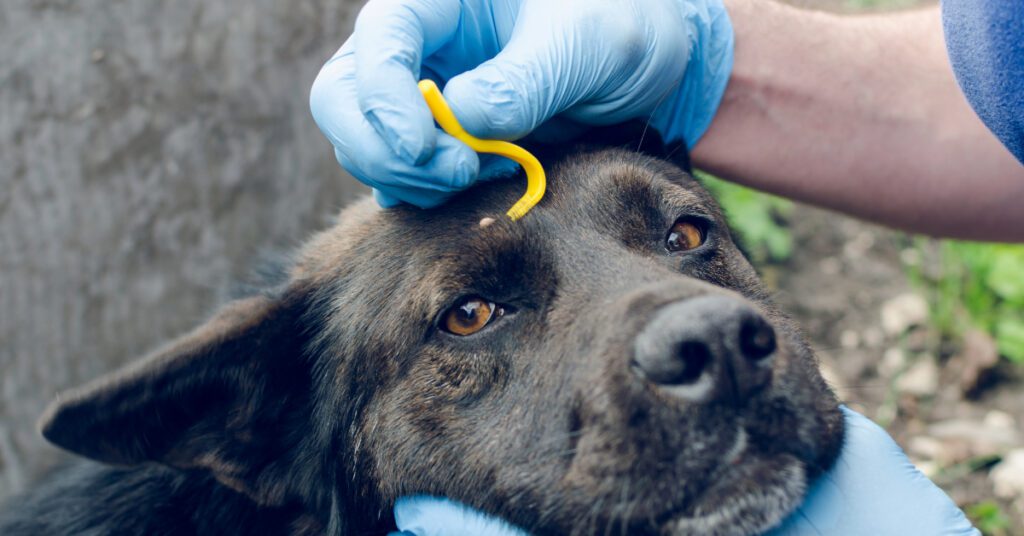
Position the tweezers as close to your dog’s skin as possible, gripping the tick’s head and mouthparts, not its body. A firm, steady grip is important.
Step 4: Pull upward with steady, even pressure
Do not twist, jerk, or squeeze the tick’s body. Pull straight up with slow, steady pressure until the tick releases. Twisting or crushing the tick can cause the mouthparts to break off and remain in the skin.
Step 5: Disinfect the area
Once the tick is removed, clean the bite site with isopropyl alcohol. Wash your hands thoroughly.
Step 6: Save the tick
Place the tick in a sealed container with a small piece of damp paper towel and note the date of removal. If your dog develops symptoms of illness, having the tick available can help your veterinarian identify the species and potential disease risk.
Step 7: Monitor your dog
Watch the bite site for signs of redness, swelling, or irritation over the next several days. Monitor your dog for any symptoms of tick-borne illness.
What If the Tick’s Head Stays in the Skin?
If the mouthparts break off during removal and remain in your dog’s skin, do not attempt to dig them out with a needle or tweezers. Keep the area clean and monitor it for signs of infection. In most cases, the embedded mouthparts will work their way out naturally. If you notice significant swelling, discharge, or your dog seems bothered by the site, contact Murieta Pet Hospital for guidance.
Signs of Tick-Borne Illness in Dogs
After removing a tick from your dog, it’s important to stay alert for symptoms of tick-borne disease in the days and weeks that follow. These diseases don’t always show up immediately, and some have an incubation period of several weeks.
Watch for these warning signs:
- Fever, lethargy, or loss of appetite
- Lameness or joint swelling
- Swollen lymph nodes
- Unusual bleeding from the nose, gums, or in urine or stool
- Neurological symptoms such as stumbling, head tilt, or seizures
If your dog displays any of these symptoms after a tick bite, contact Murieta Pet Hospital in Rancho Murieta, CA right away. Early diagnosis and treatment of tick-borne diseases improves outcomes significantly.
Tick Prevention for Dogs
The best approach to tick removal is not needing to do it in the first place. Year-round tick prevention is strongly recommended for dogs in California, particularly those that spend time outdoors.
Effective tick prevention strategies include:
- Using veterinarian-approved tick preventatives. Oral medications, topical treatments, or tick collars are all options your vet can discuss
- Performing a thorough tick check after every outdoor adventure, paying close attention to the ears, between the toes, around the tail, and under the collar
- Keeping your yard tidy by mowing grass regularly, removing leaf litter, and trimming brush along fence lines
- Avoiding areas of tall grass and dense vegetation during peak tick season
Our team at Murieta Pet Hospital can recommend the most appropriate tick prevention product for your dog’s lifestyle, size, and health history.
When to Call Your Vet After a Tick Bite
Removing a tick from a dog at home is generally safe and effective when done with the right tools and technique. However, there are situations where a call to Murieta Pet Hospital in Rancho Murieta, CA is the right next step:
- You were unable to remove the entire tick
- The bite site looks infected including red, swollen, or oozing
- Your dog is showing signs of illness within days to weeks of the bite
- You found multiple ticks on your dog at once
- You’re unsure of the tick species and want an expert opinion on disease risk
Tick bites are common, but they don’t have to lead to serious illness. Acting quickly, removing ticks from dogs properly, and staying current on prevention are the best tools you have to protect your dog’s health. Call (916) 885-0288 or book an appointment online.
About Us
At Murieta Pet Hospital in Rancho Murieta, CA, we provide modern veterinary care for dogs, cats, birds, and exotic pets. Our team offers wellness care, dentistry, diagnostics, surgery, and same-day appointments in a welcoming hospital setting.